How To Add Your First Piece of Custom Merchandise As a Small Business
Whether you are a brand new business and want to build initial awareness, you’ve been in business for a while and have countless adoring fans, or you’re somewhere in between, adding custom merchandise can be a great opportunity for growth. This blog post will cover the basics of introducing your first piece of custom merchandise, from the perspective of an experienced graphic designer who has helped many small businesses and nonprofits add their first pieces of merchandise and grow their offerings.
There are questions and decisions to consider upfront to ensure you are setting yourself up for success and won’t run into any unexpected (or expensive) issues.
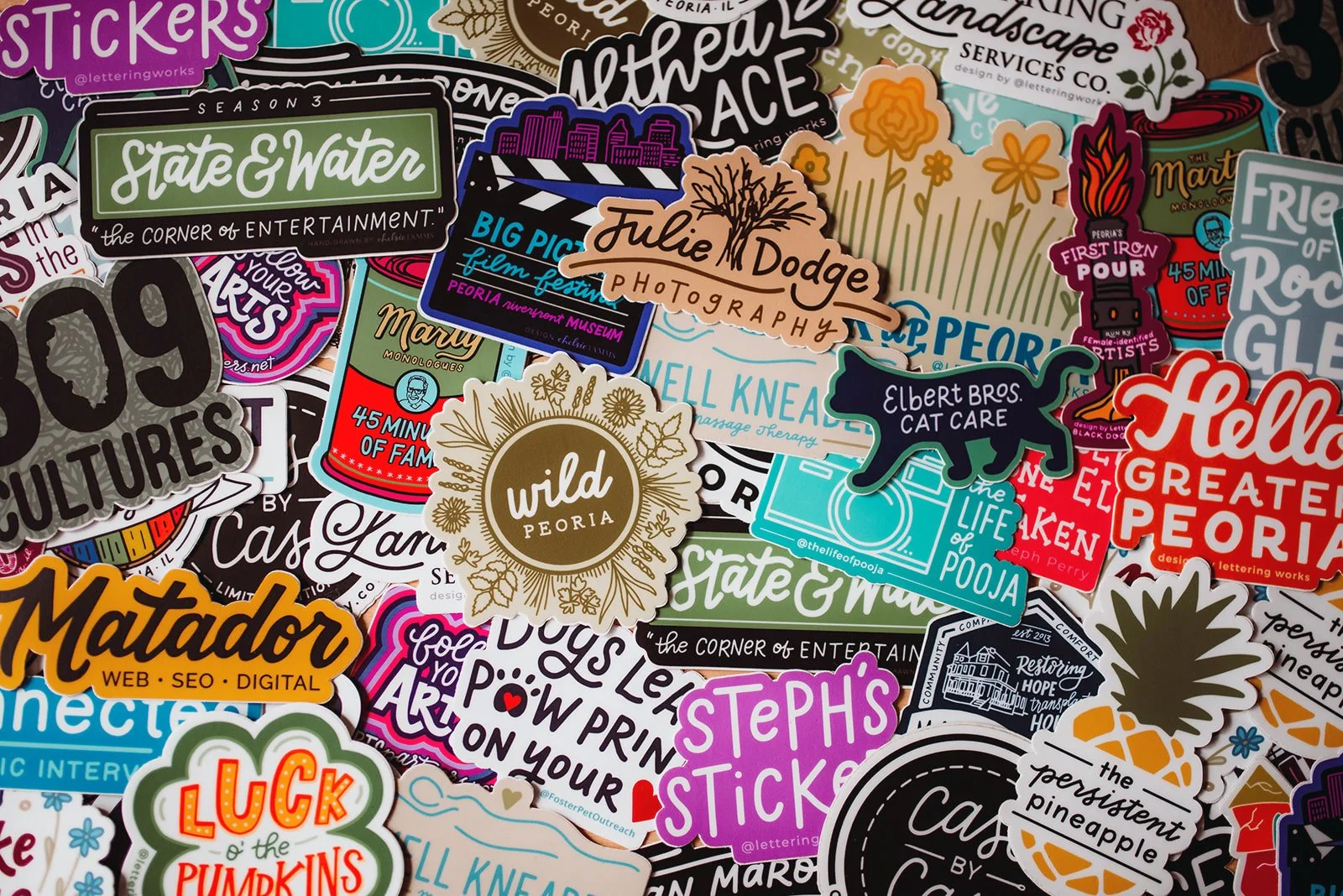
A collection of custom stickers, many small business and event logos with some custom designs
Should I do it myself or hire a designer?
In order to determine if you should DIY or hire a designer, you should consider your brand values and what would be most “on-brand” for your business or organization, as well as your capacity and available skillsets. You also must consider your available budget.
The price of working with a professional designer really varies, but you should be prepared to pay at least $300 for a quality, custom design. For a more experienced designer, it’s common for starting rates to be above $1,000. Before reaching out to a designer, it’s helpful to generally know your project scope, budget, and ideal timeline.
If you haven’t worked with a designer before (or would like to review best practices), you can download my “Mastering Creative Collaboration - A Comprehensive Guide to Working with a Designer” guide for free here.
Defining the purpose of your first piece of custom merchandise
You might be considering adding your first piece of merchandise as an additional source of revenue, way to creatively market your business, or an opportunity to provide something for your top fans. While you can create something that is multi-purpose, you will want to center your primary goal so that you can make aligned design and production decisions.
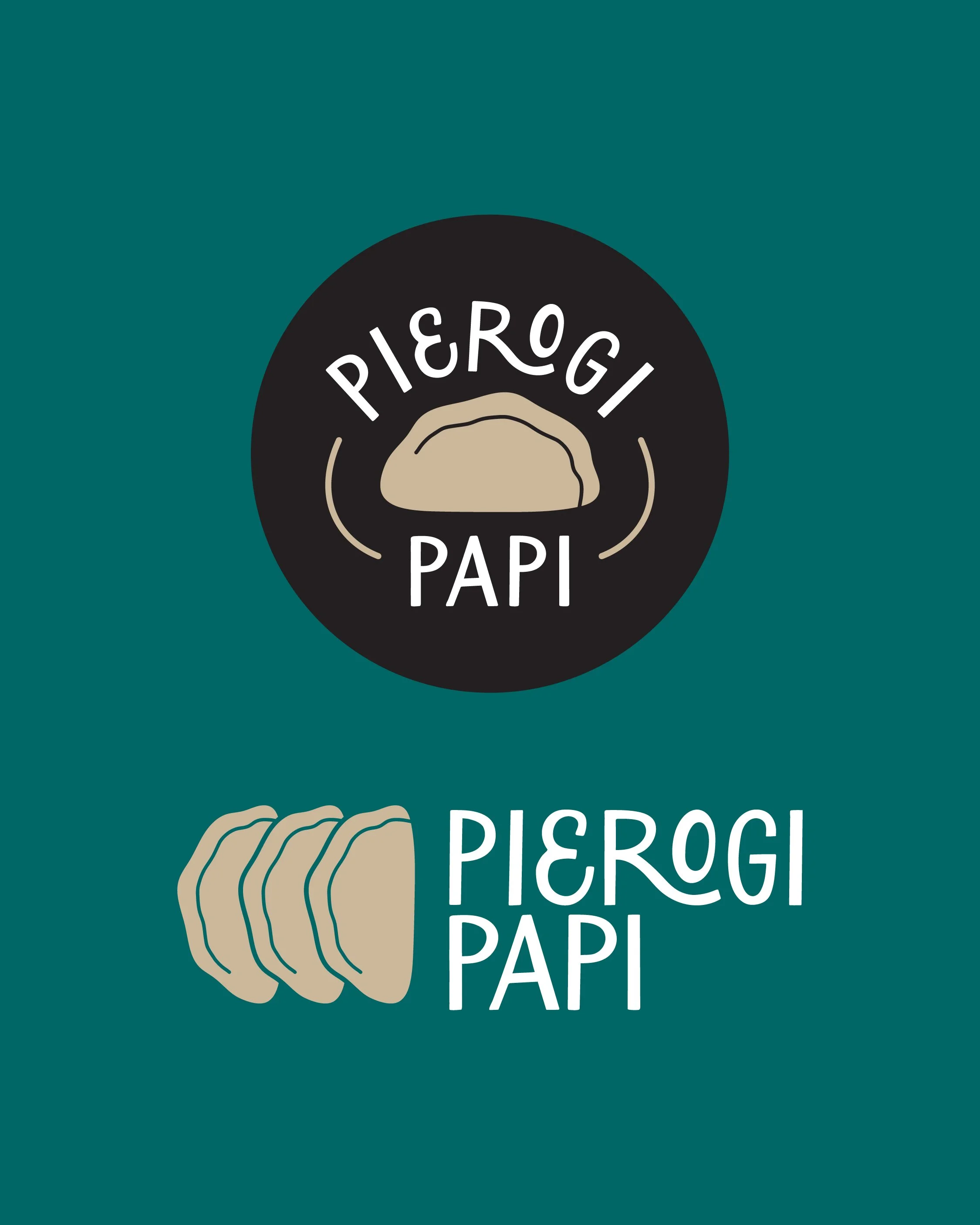
Option 1: Logo Merchandise
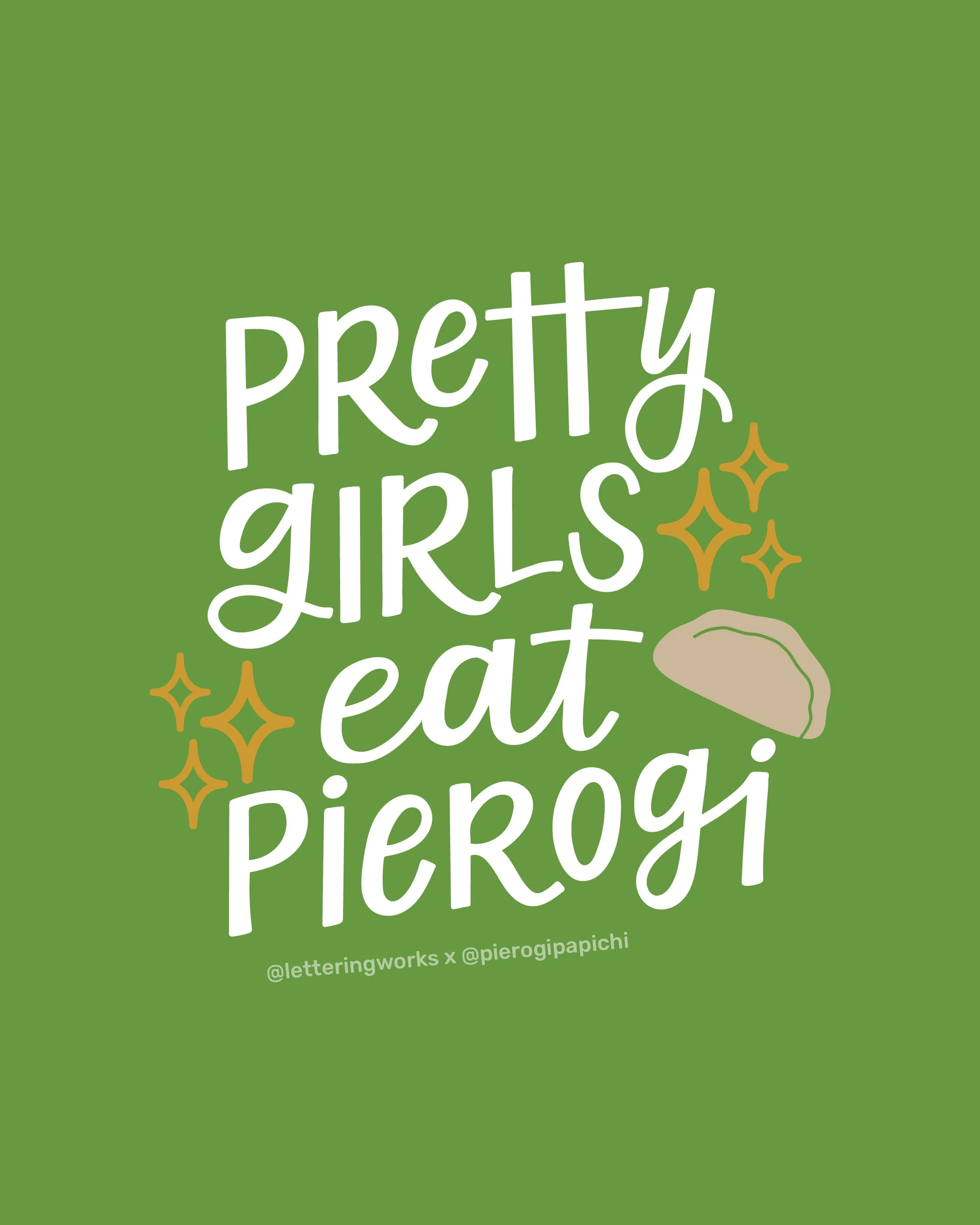
Option 2: Custom Design, Specifically for Merchandise
What should the design itself be?
If your budget is tight or you’ve gotten requests from customers, it’s logical to start with design assets that you already have established, such as your logo. Using your logo as merchandise can be a great way to get your name out there if you are a newer business or provide something tangible for your biggest supporters to take with them and show off their love and support. This might lend itself to more of a marketing purpose, depending on the loyalty you’ve built with customers.
You also might want to consider something created specifically for the merchandise. I always recommend that my clients lean into the lifestyle that aligns with their customers and supporters. You want to strive to create something that highlights your values and showcases your uniqueness. This could be something hyper-specific to your business or it could be something more general that you know will resonate with your supporters. A good place to start is brainstorming what your business and customers have in common or have a shared appreciation of.
You are going to know your business best, even if you choose to work with a designer. When opting to work with a designer, you’ll likely find the most success when you are able to communicate clearly about your business, values, and points of differentiation. Among all of these unique qualities, designers are often able to extract the essence and translate what makes you unique into merchandise and designs that will resonate with your audience. Some designers offer strategy and consulting if you need more help with ideation.
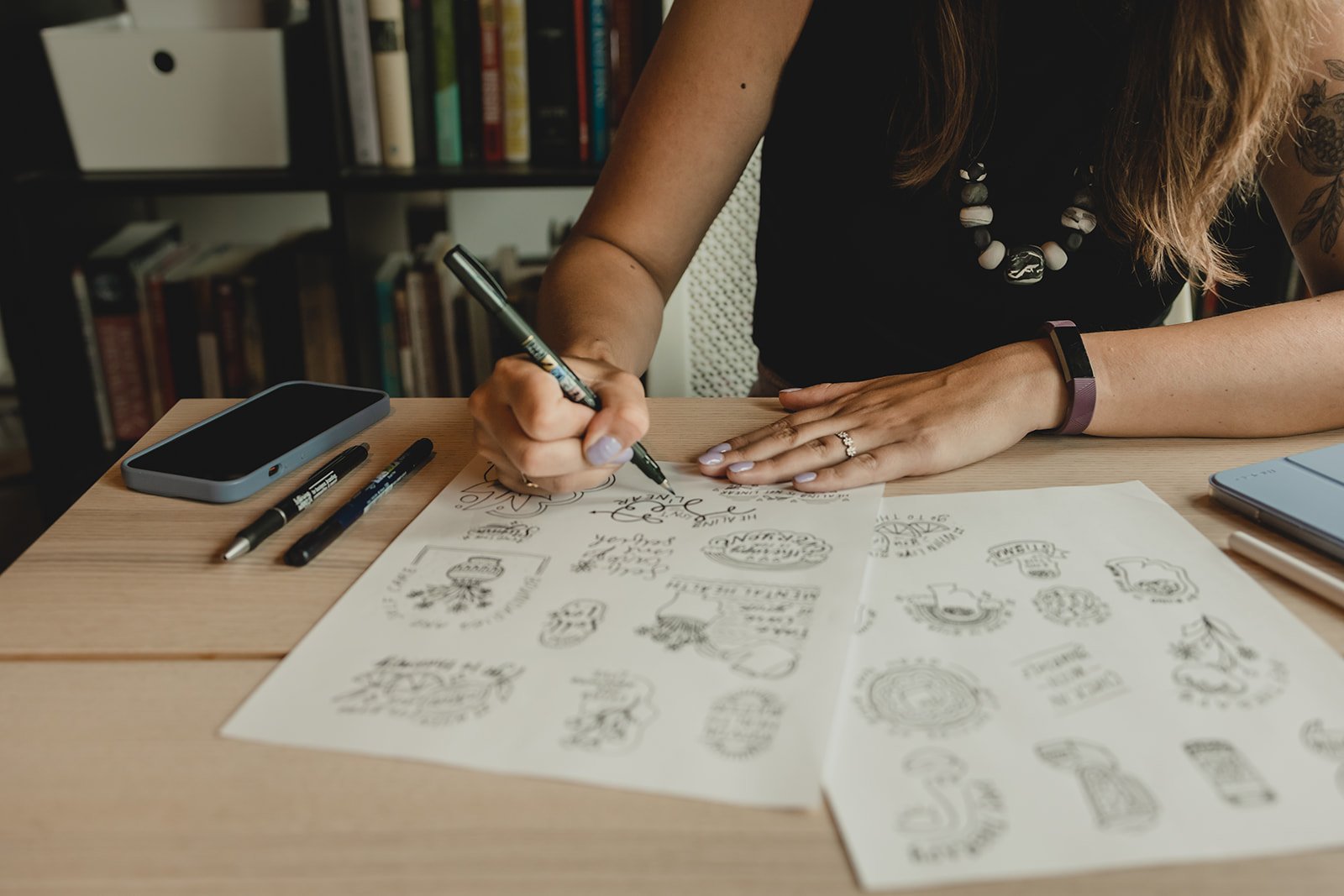
How to pick the right designer for your project
If you’ve established that you don’t have the capacity or skillset to design something unique that reflects the quality of your business and have committed to hiring a designer, you’ll have to think about how to hire the right one for the job.
Start by considering your business values. For example, if you care about your local community, you may want to work with a designer who is local to your neighborhood or even one of your largest supporters, if they have a skillset that aligns with your needs. If you are a woman-owned business, you might want to seek out supporting a fellow woman-owned business for the design.
Additionally, if there is a cause that you care about or contribute to regularly, you can find a designer who also aligns with that cause. Finding aligned partners allows for a greater opportunity to share the development of the design. You can also make a larger statement about your business and values through these intentional decisions and sharing the behind-the-scenes context and reasoning. Not to mention more opportunities to donate a portion of proceeds.
And if you’ve found a design online that you absolutely love? Try to find the creator and reach out directly to see about the possibility of working together. Look for a credit on the artwork or do a reverse image search to locate the original source. If they are unable to take on the project, they may have recommendations for other options.
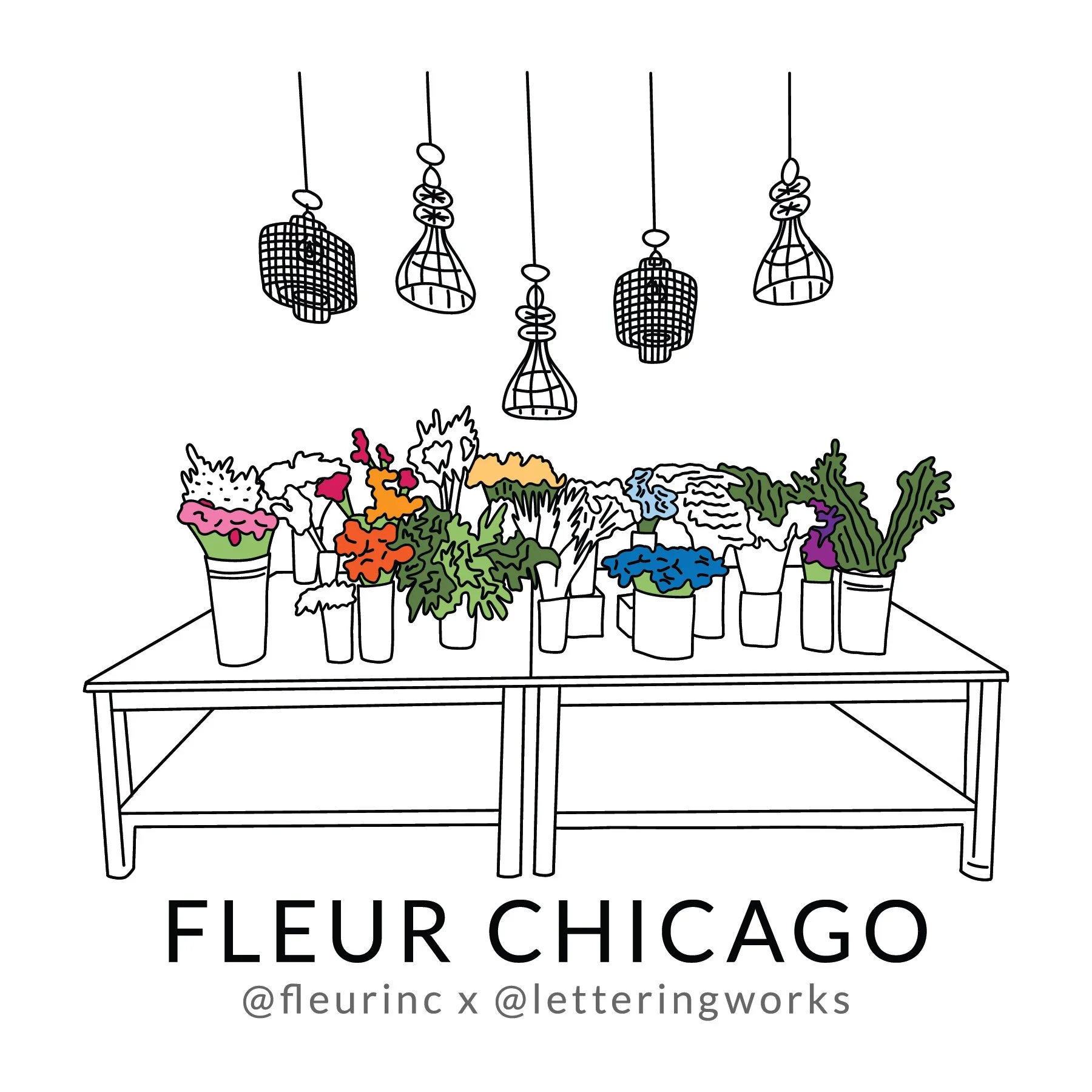
Custom sticker design for Fleur Chicago inspired by the flower bar
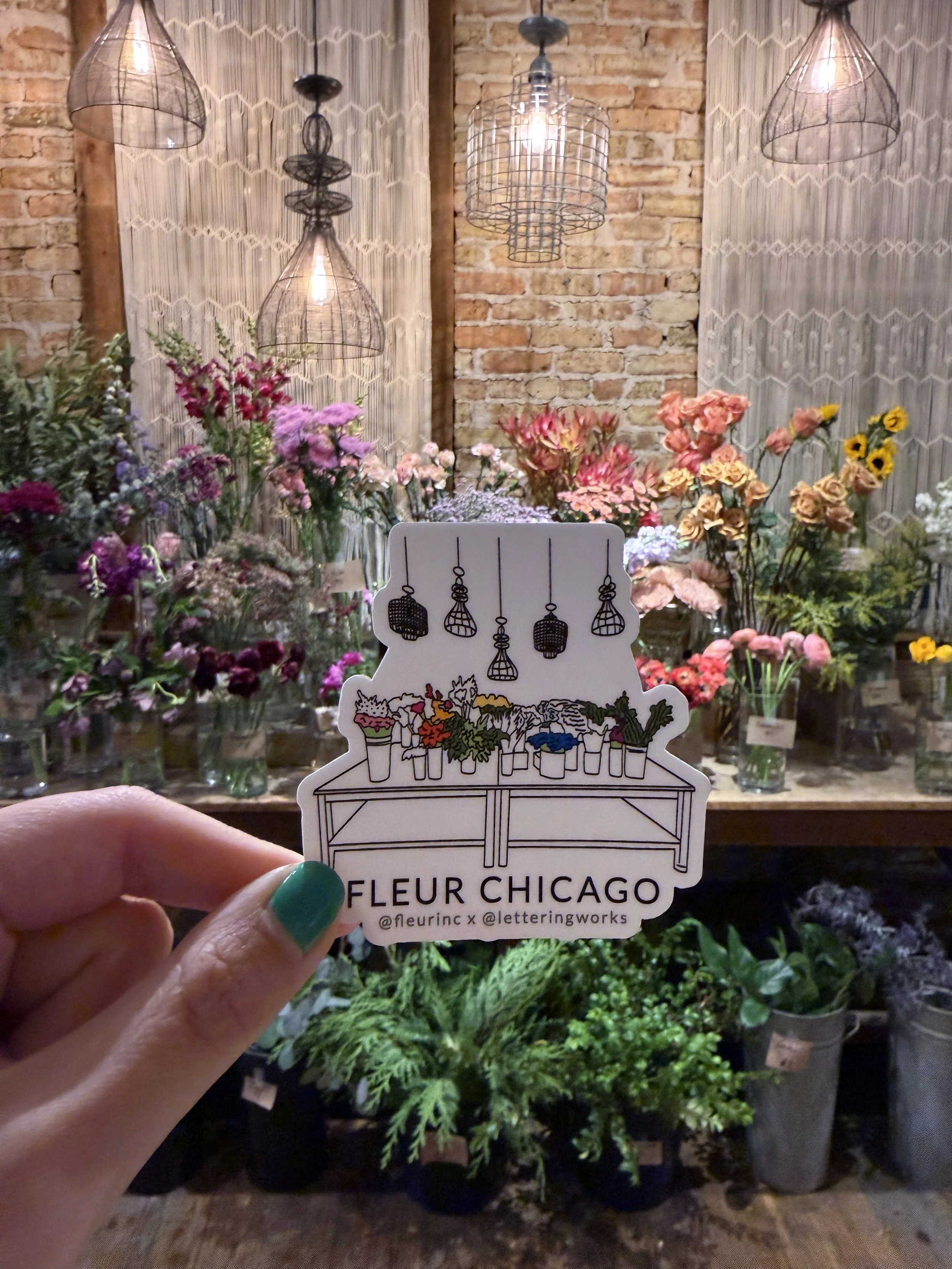
Custom sticker design inspired by the flower bar
“Working with Chelsie from Lettering Works is an absolute dream! Her talent speaks for itself, and I really appreciate her efficiency. As a creative with a million things going on, she kept everything neat, organized, and easy for me to manage. The sticker design she created for our brick-and-mortar is adorable and perfectly captures what we offer at Fleur. I highly recommend her to anyone looking for thoughtful, high-quality design work!”
What if you don’t have a budget or the skills to do it yourself?
Look for designers or neighbors who might be willing to trade their services. This is when you can ask your community or largest patrons if they have the skills you are looking for. Because they are already spending money with you, they may be open to exchanging their skills instead of dollars. It’s always helpful to put a clear outline of expectations in place, because you don’t want to lose a top fan because of poor communication.
Sometimes you just don’t have the budget now and it’s something you can plan for in the future. Even though custom merchandise can be a strategic addition to your business, it’s typically better to do it right than to just do something to do something. This is because whatever you put out will be a reflection of your business and brand. There’s a chance that your piece of merchandise might be the first (or only) thing that someone sees, so you want to make sure that it represents you well. You wouldn’t want people thinking that you cut corners or don’t offer quality goods or services because of a poorly-executed piece of merchandise. You truly never know where a piece will end up and who it could attract (or repel).
And then there is the temptation of using AI to create something. Your business might align with the use of AI and it might make sense for you to generate merchandise through AI tools. But it could also paint your business in a negative light if it doesn’t align with your values.
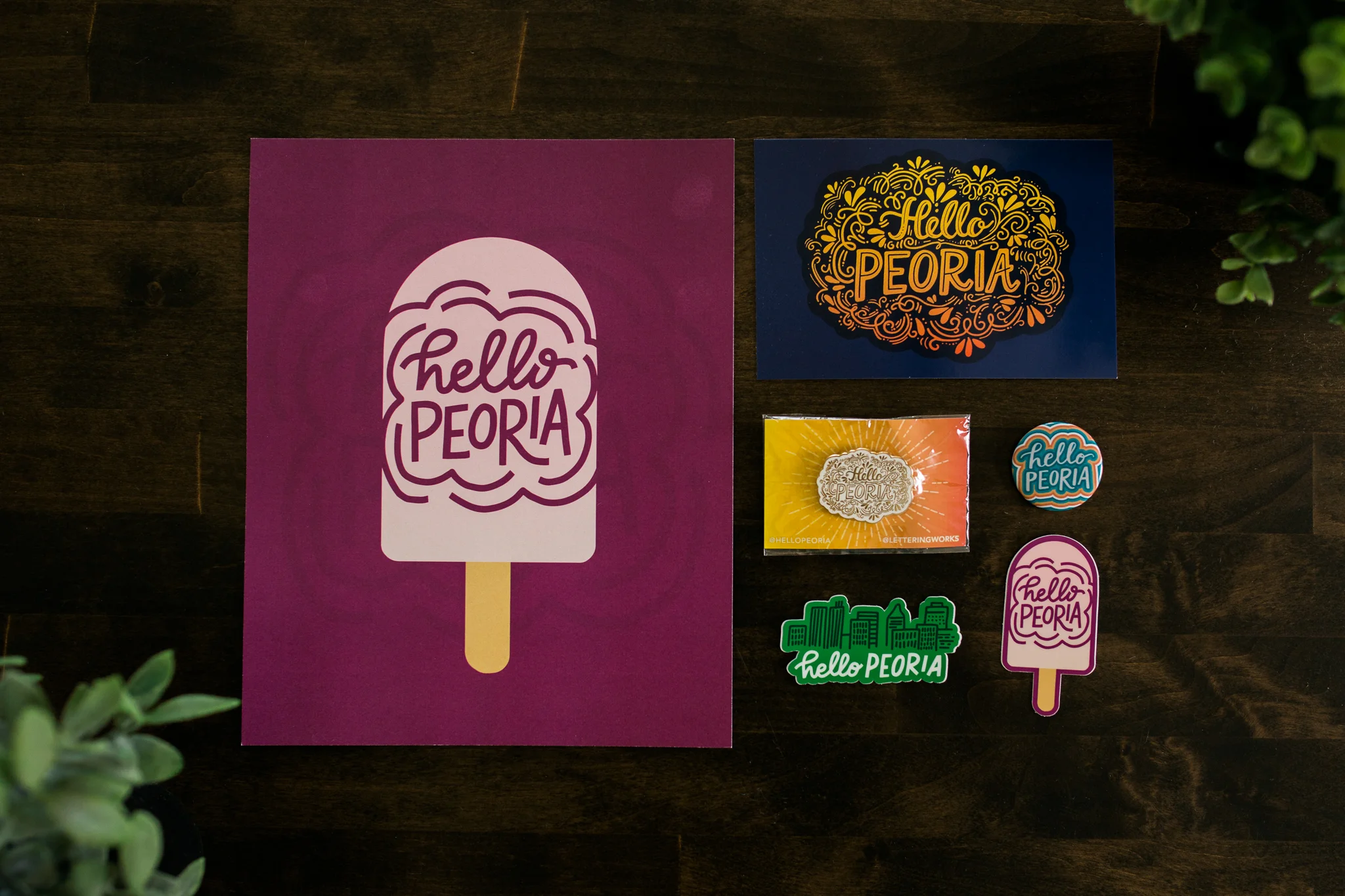
Hello Peoria Merchandise - print, postcard, enamel pin, button, and stickers
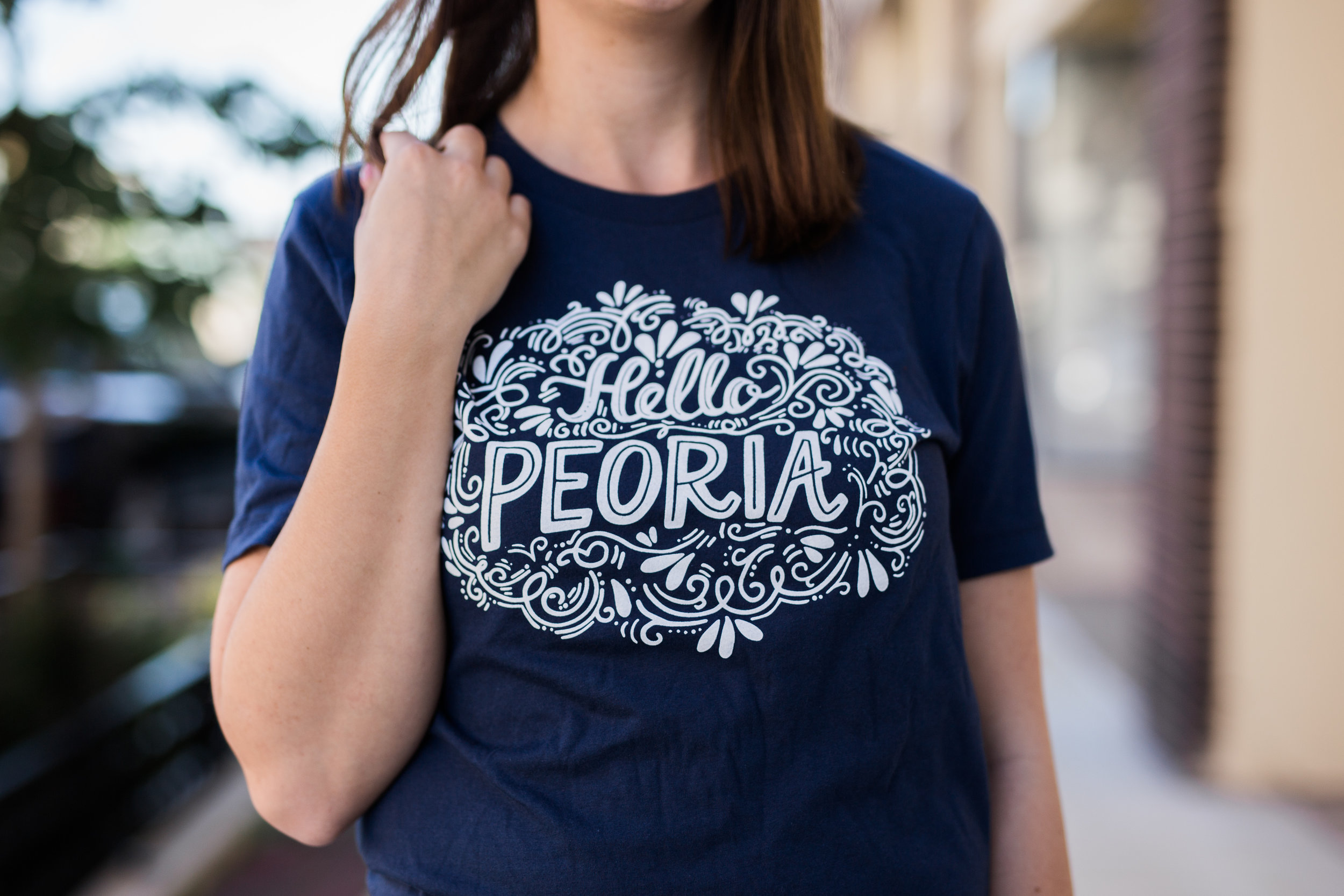
Hello Peoria T-Shirt
Choosing what product makes the most sense for your business
You’ll likely want to consider the type of product that you’ll be making before completing the design because your choice here may affect the design itself. For example, depending on your method of printing, apparel may require your design to be limited to one or two colors.
Common options for your first piece of custom merchandise include stickers, buttons, magnets, postcards, enamel pins, tote bags, t-shirts, and hats. Each of these products comes with various options and requirements. Will you find a local vendor or look online? What type of minimums are required for each type of product? And how might that change based on who you have produce them?
Stickers, postcards, and buttons are a great place to start because they typically allow for full color printing and low minimums. These are lower price point items that are also one-size fits all, so you don’t have the challenge of managing various sizes.
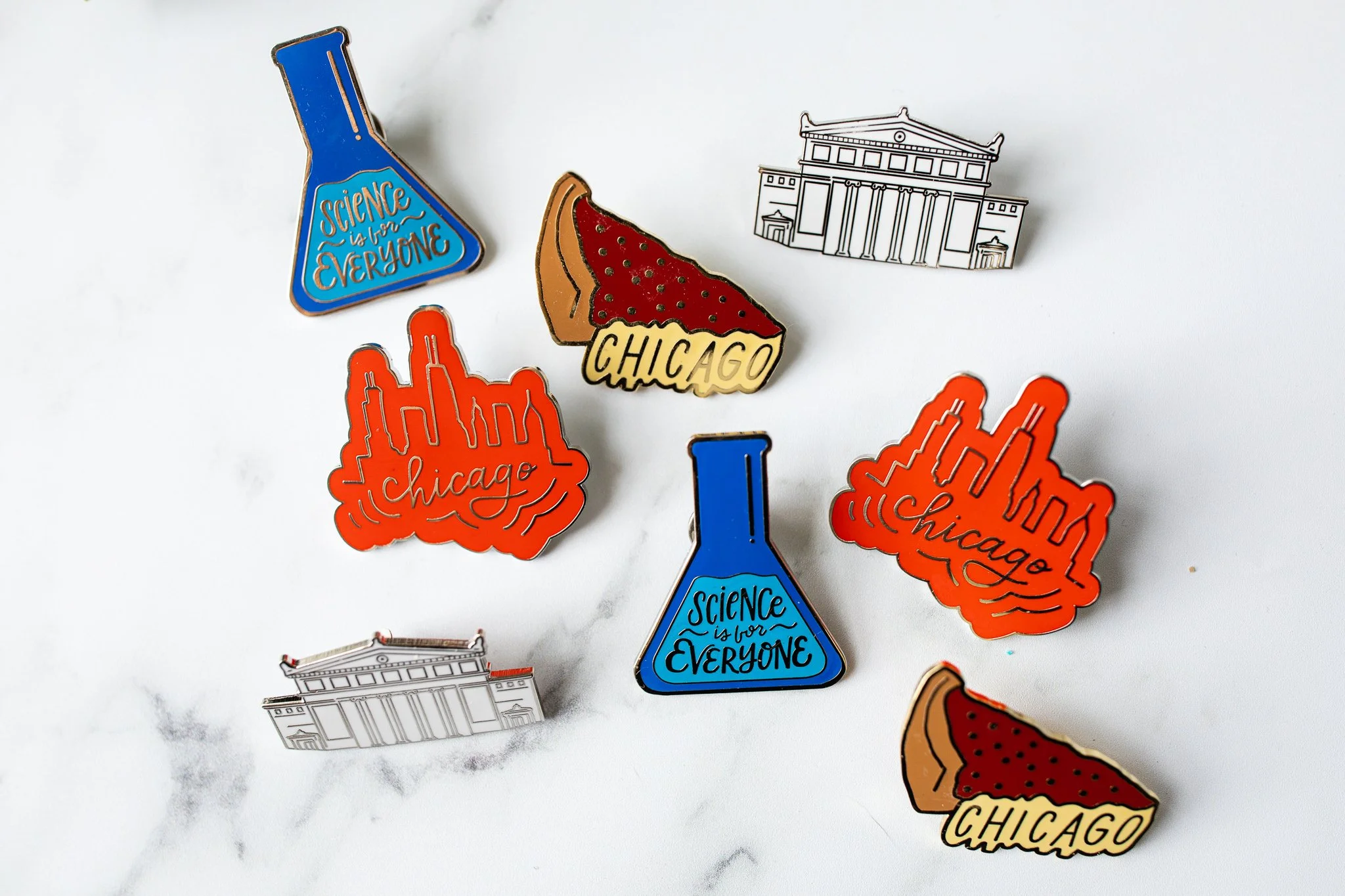
Enamel Pins for the Field Museum; extras were put into production for Lettering Works to sell independently

A large wholesale order served as the “pre-sale” of this new merchandise item and helped exceed production minimums
Should you have a pre-sale of your merchandise?
Pre-sales can be a great way to generate the cash needed to meet the minimum order quantities of various products. They are also an opportunity to validate your design and selected products before putting any money into their physical production. In addition to generating some cash flow, pre-sales or pre-orders can be a way to gather data on popularity and help you make projections of sales. You can base your order on the amount of pre-sales you get so that you are taking advantage of price breaks but also not overstocking your first offering.
Pre-orders are often most helpful for products that require you to stock a variety of sizes. It can be hard to get these estimates right and running a pre-order ensures you’ll have enough of each size (at least to start with).
Pro tip: Whether or not you offer a pre-sale, start smaller than you think to validate the idea and allow for an opportunity to tweak things. You can always put a second run into production! It can be really frustrating to get stuck with more merchandise than you could ever go through, so when in doubt, start with limited runs.
It’s great to get customer feedback before getting too far into the production of an item. While you might not want to co-create merchandise with your entire audience (because everyone is going to have different opinions), you might consider limiting the scope of your questions when asking for input. For example, you could put together a vote on the color options available and order the top design or even top two to start.

ABOUT THE AUTHOR
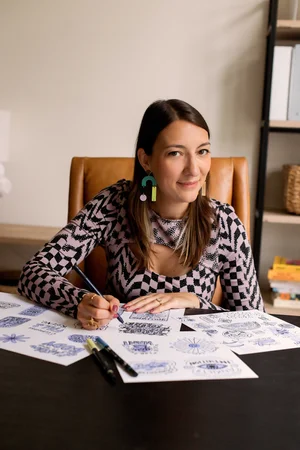
Chelsie Tamms is a lettering artist and brand designer in Chicago. Her work seeks to explore and foster connection to community, whether geographically or identity-based. All of her pieces start with small, hand-drawn sketches and are then vectorized using Adobe tools, like Fresco and Illustrator, to allow for a variety of uses and applications.
She is available for custom merchandise projects. Reach out here if you’d like to work together.